Existing situation
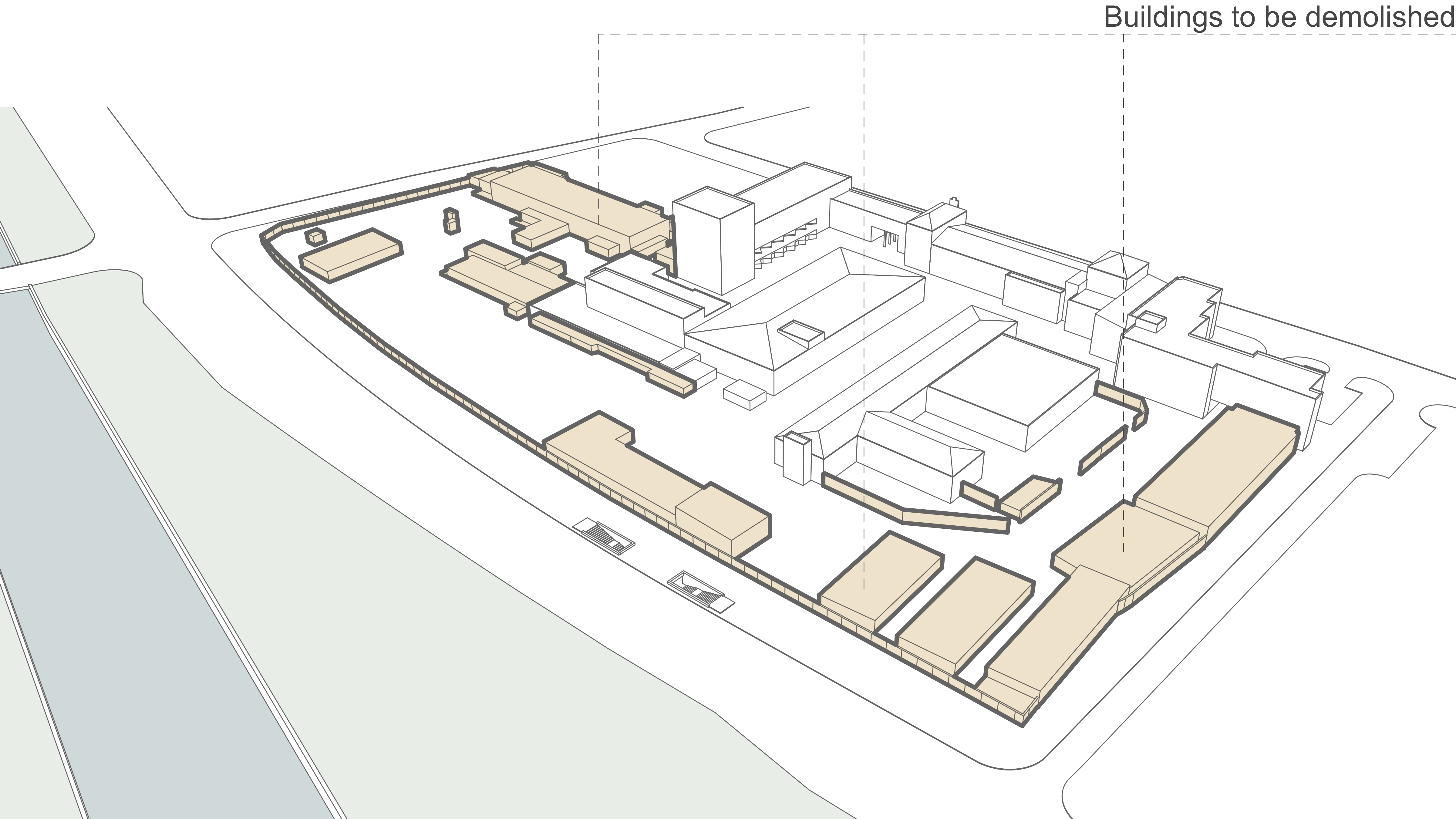
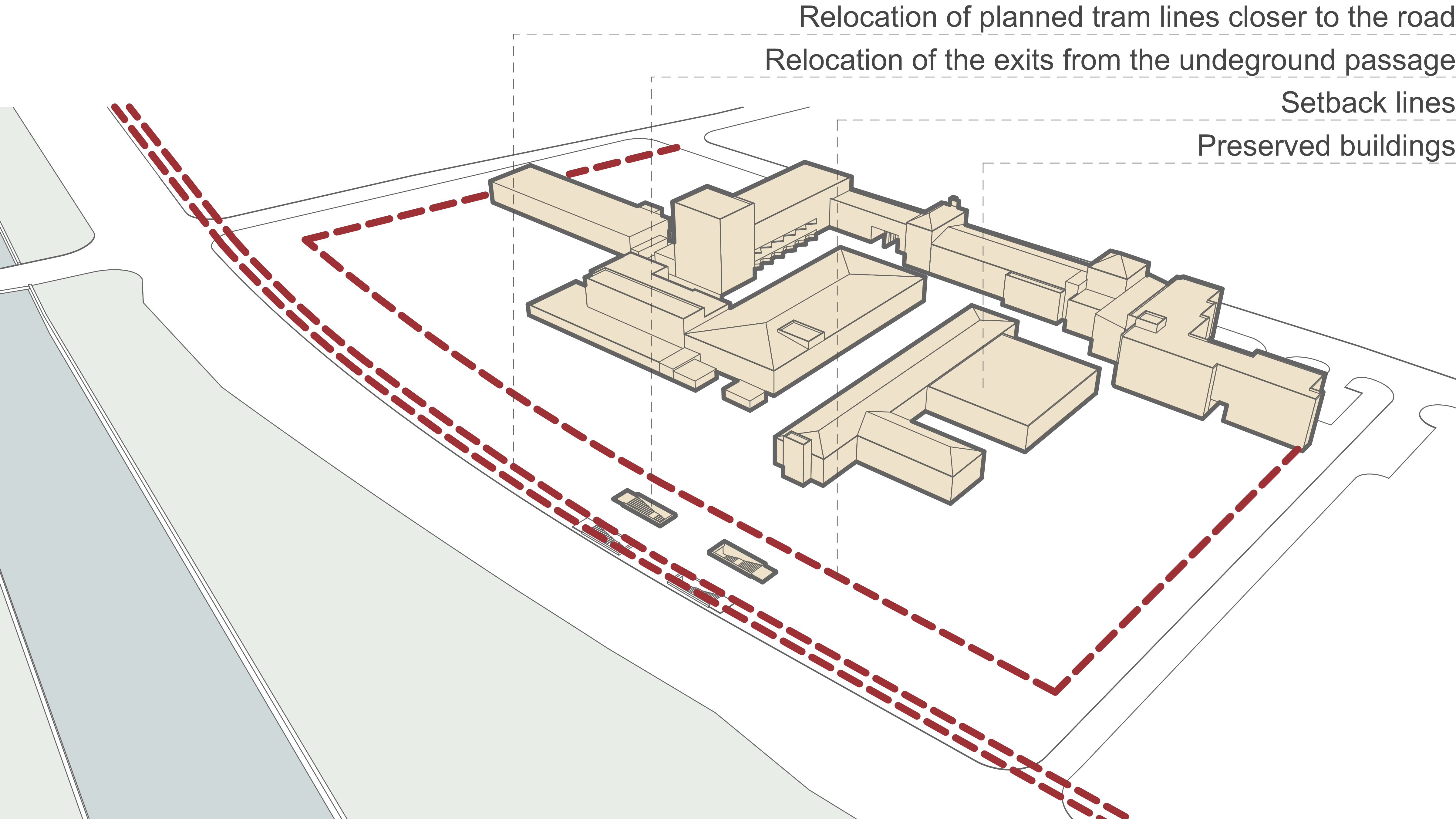
The diagram shows the existing situation and buildings. Buildings that can be demolished are highlighted, as they are either semi-ruined or have no historical value.
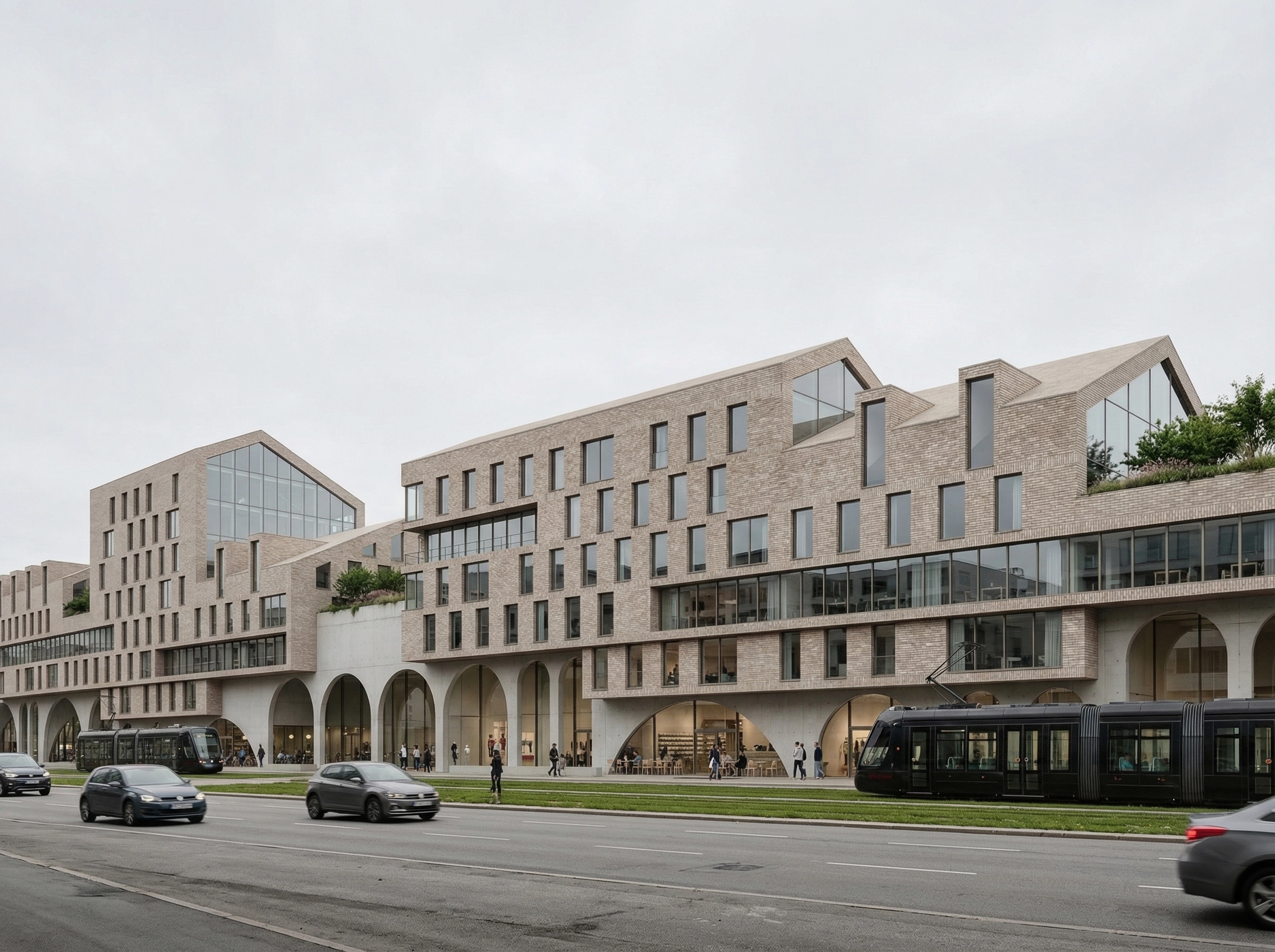
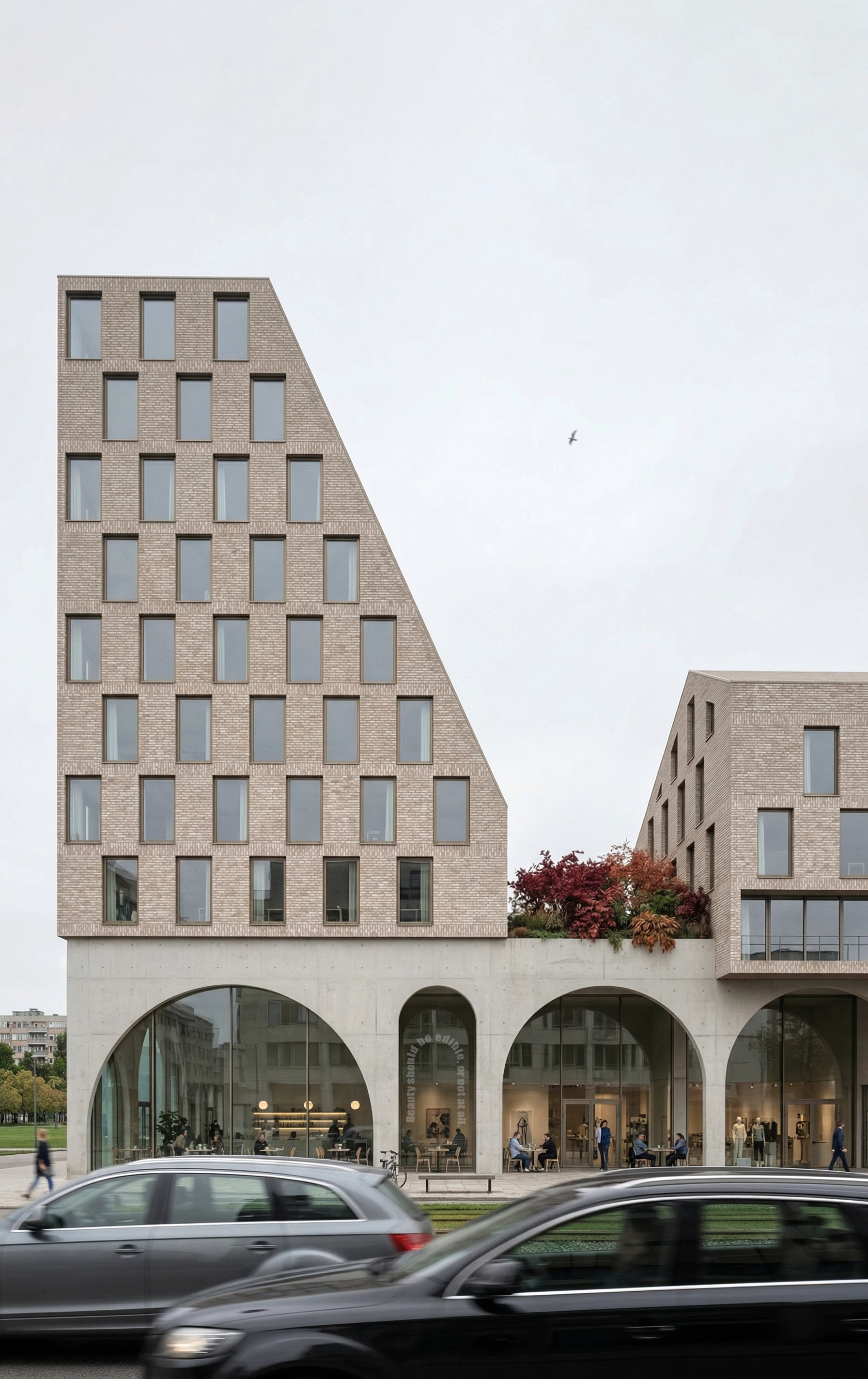
The project transforms the historic Kristall Distillery in central Minsk into a contemporary urban complex that celebrates both its industrial heritage and its city context. The original late-19th-century distillery forms the core of the design, while adjacent industrial buildings are unified under a transparent, crystalline glass facade.
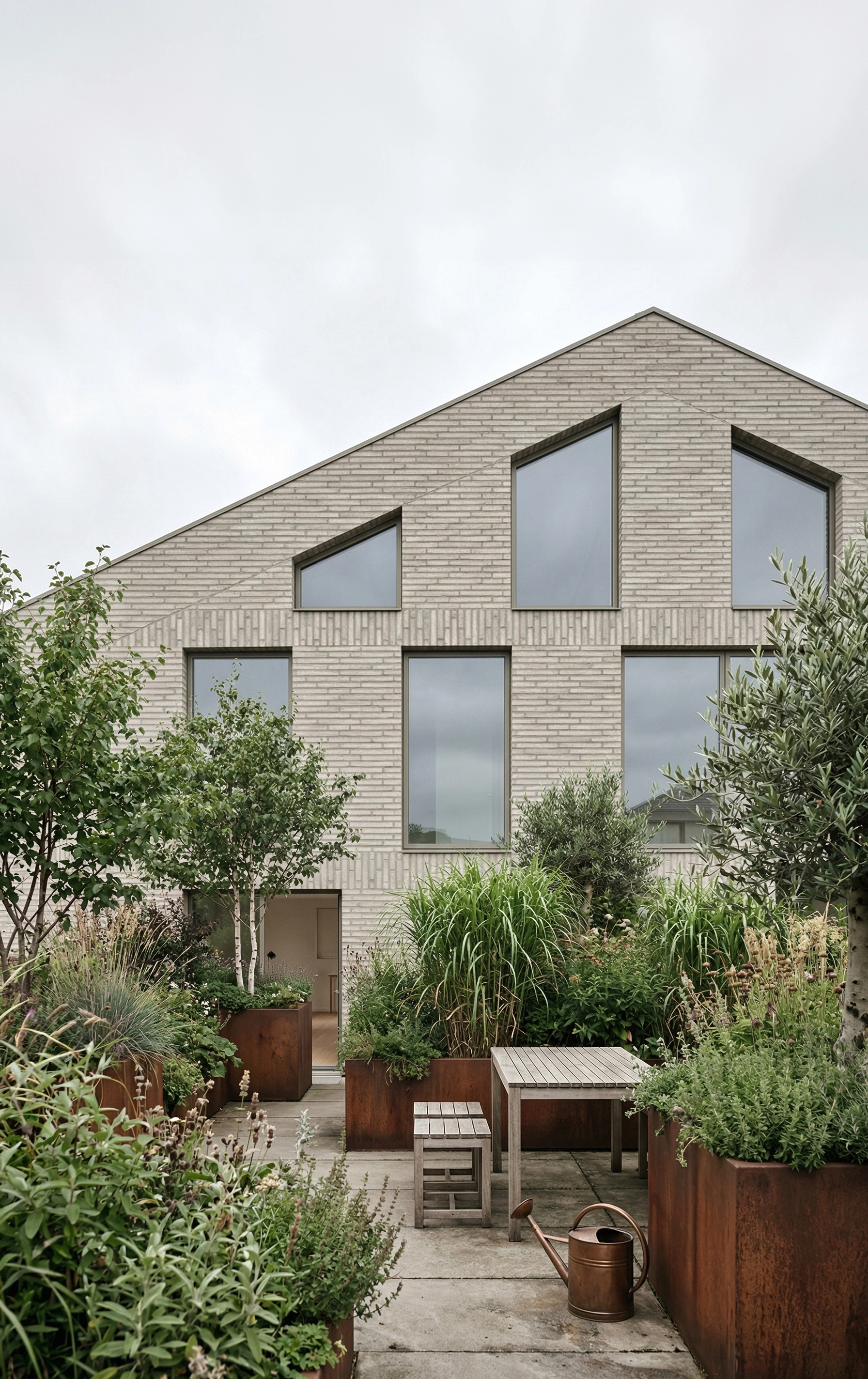
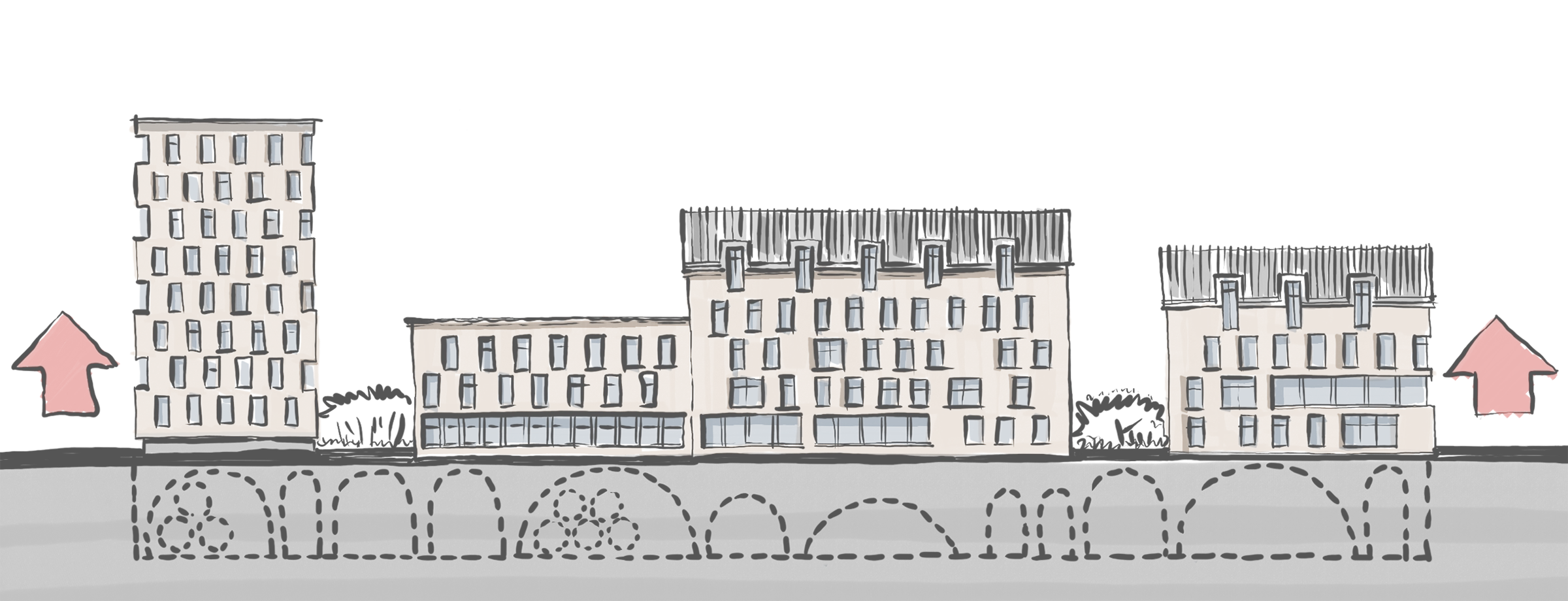
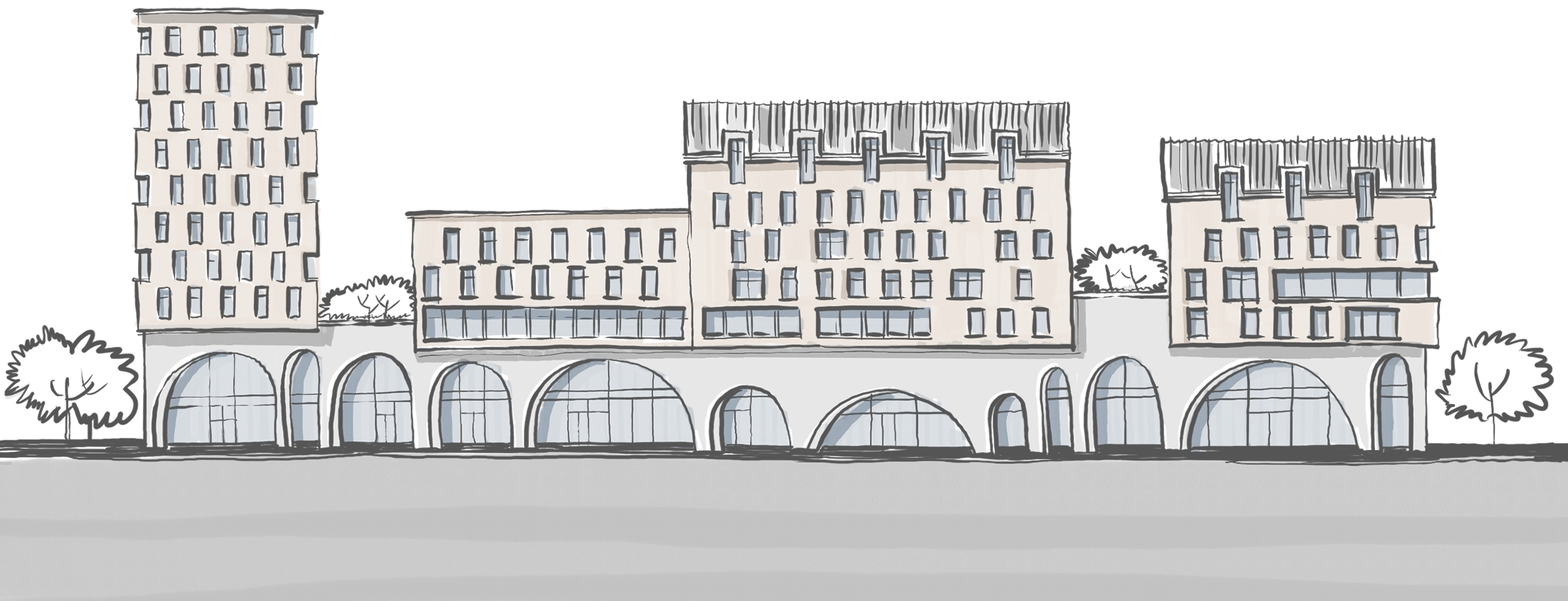
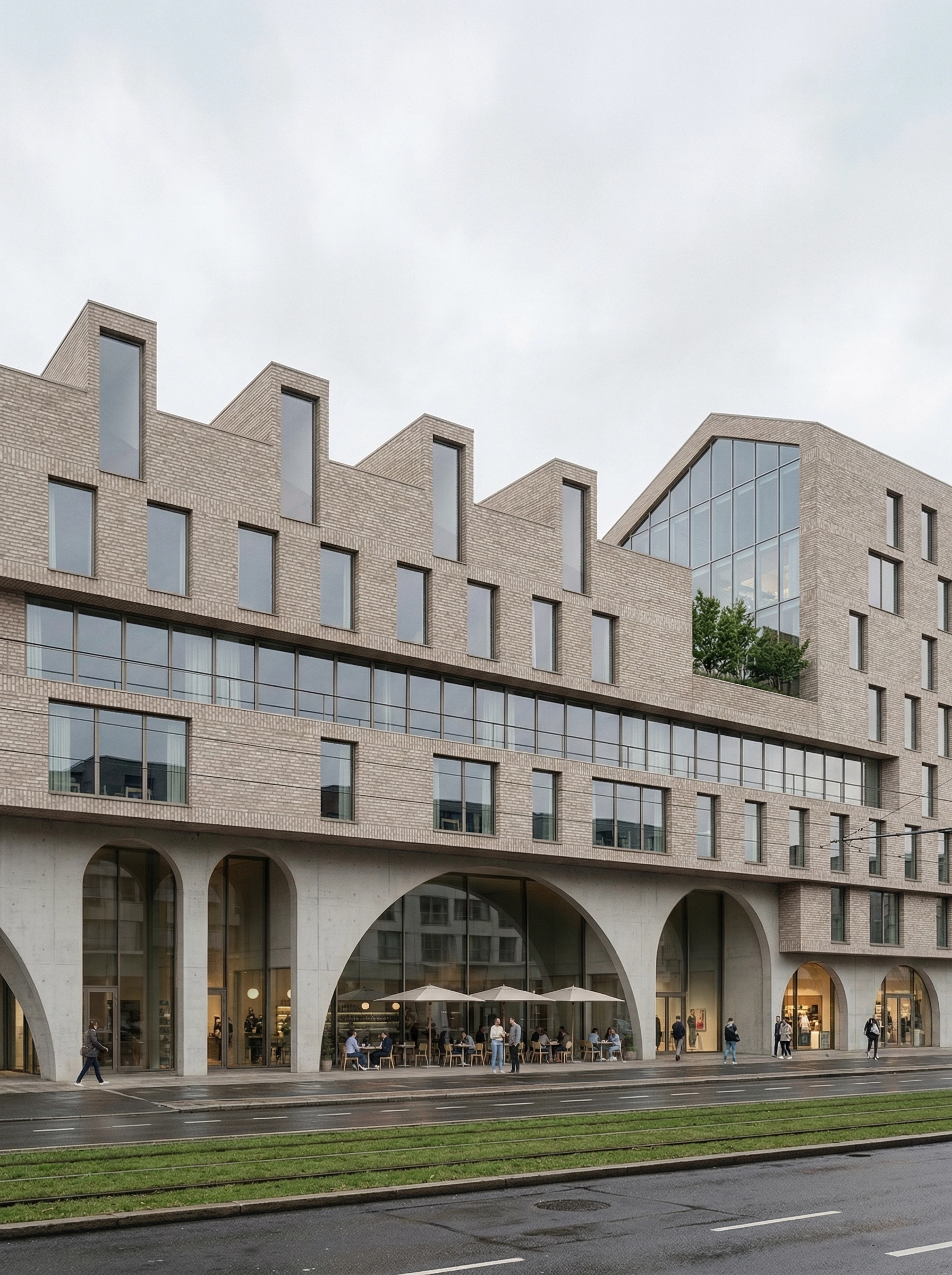
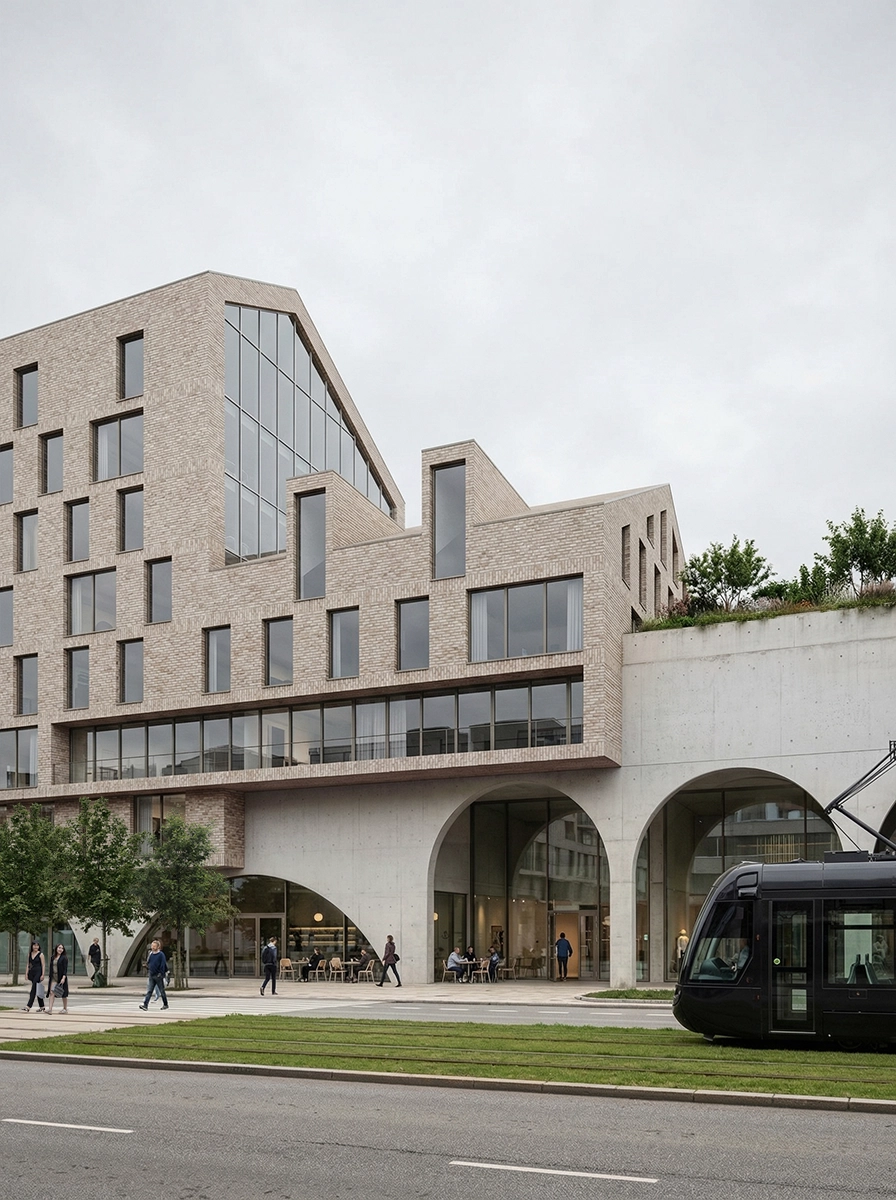
The concept divides the complex vertically: a low, two-story base opens to the street with arched passages and exposed cellars, revealing the history of production while accommodating shops, cafes, and public circulation. Above, sculpted office volumes rise with terraces and green spaces, establishing a new skyline and framing views along Minsk's water-green axis.
By lifting and opening the base, the design turns the ground level into a vibrant, porous urban space. The historic cellars become active streets, forming a network of trading alleys that animate the square and connect the complex to the city, merging heritage, commerce, and public life in a single architectural gesture.
The diagram shows the existing situation and buildings. Buildings that can be demolished are highlighted, as they are either semi-ruined or have no historical value.
It illustrates the park's programmatic organization: the solar panel zone is highlighted in blue, the main pavilion and central park area in red, and outside activity areas, including playgrounds, sports areas and recreational spaces in yellow.
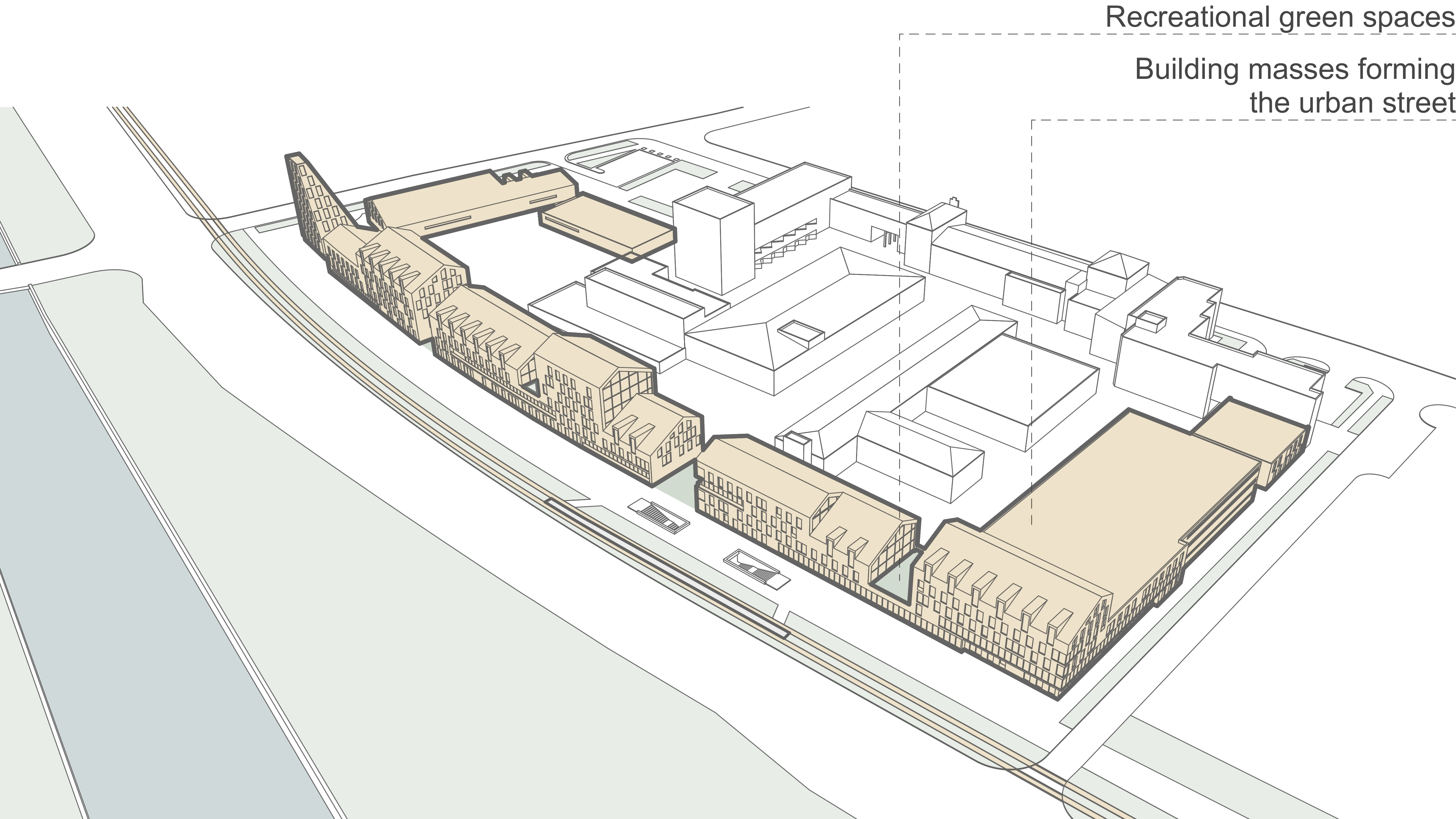
The diagram illustrates the creation of an urban building line: low-rise buildings, preservation of the tower with a triangular form, and creation of green spaces, gardens, and recreational areas between blocks.
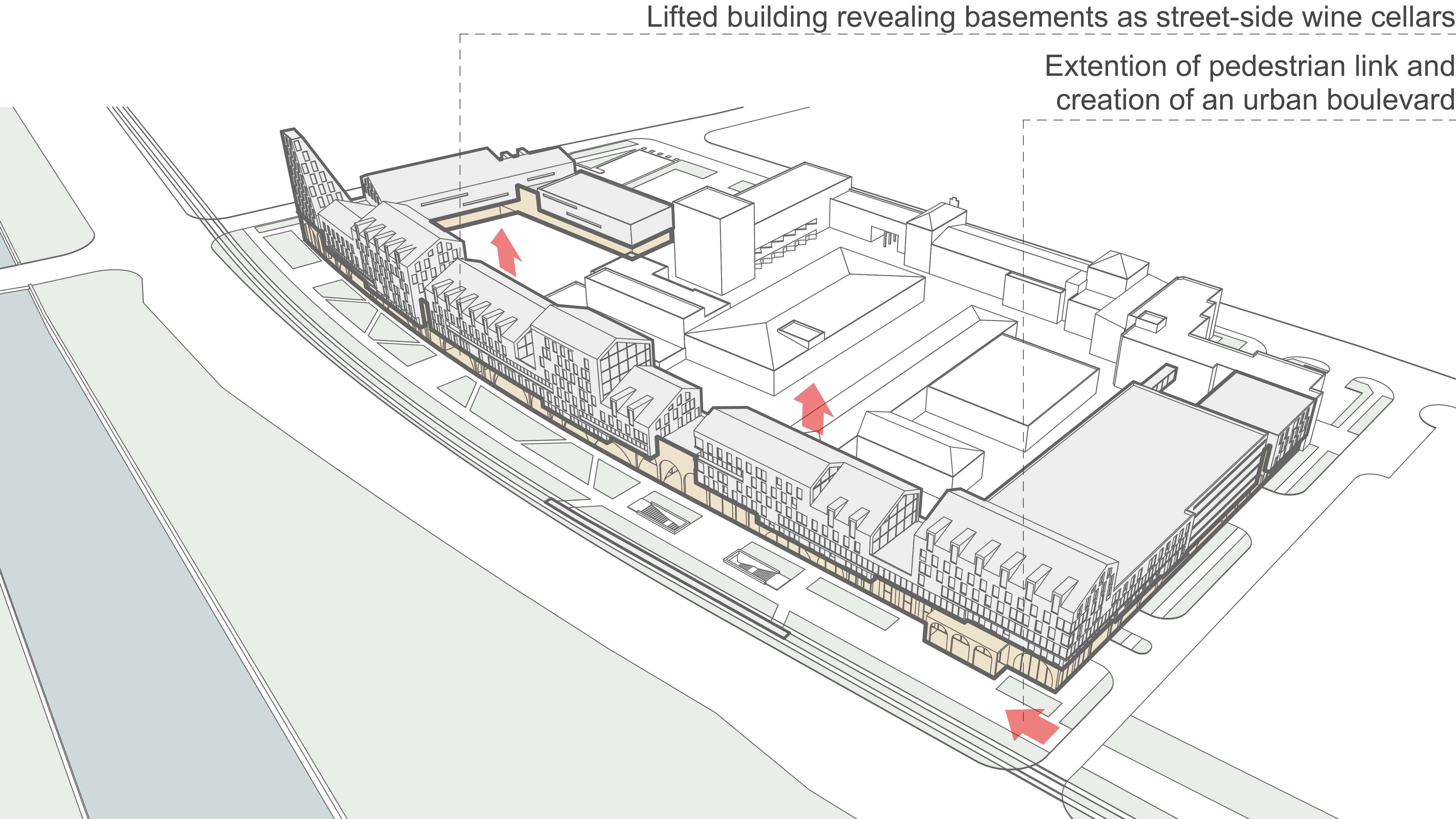
The diagram shows the urban development lifted upwards, revealing the basements. The basements are transformed into arched street-side market rows. Since the site was formerly a liquor and spirits factory, these market rows reflect its historical essence and become a distinctive urban feature.